Frequently Asked Questions
Find quick answers to your most common questions about SAF-T, e-Invoicing, e-Transport, VAT compliance, and Latitude App features. Discover how to set up the platform, explore its capabilities before subscribing, and master tax reporting, statement processing, and regulatory compliance with confidence.
What is Latitude App?
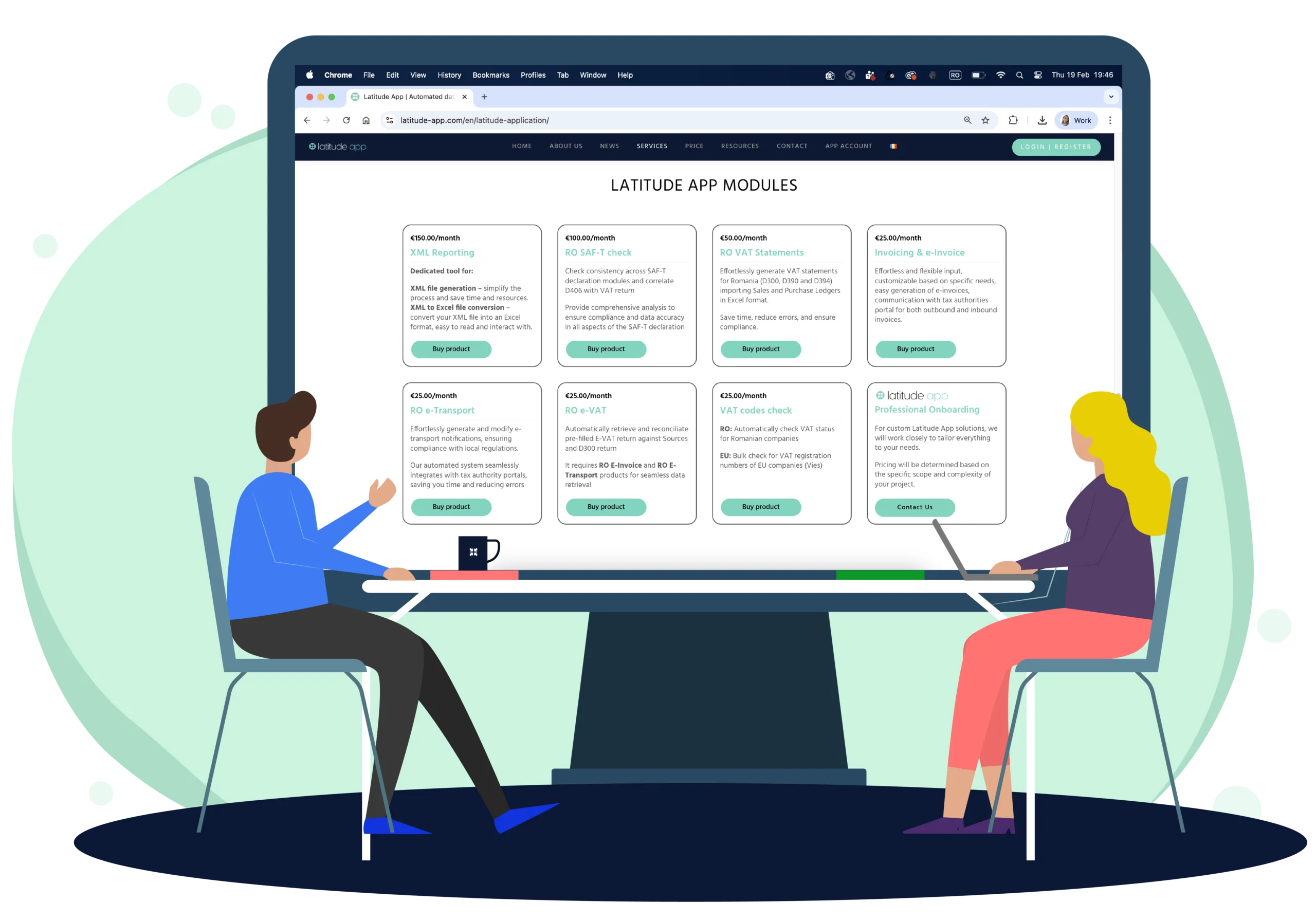
Latitude App is an integrated platform for automating tax reporting and data exchange. Focused on boosting operational efficiency, Latitude App delivers advanced features such as P2P e-Invoicing, e-Transport, and the generation and verification of SAF-T and e-VAT declarations. These solutions simplify the management of XML-based tax reporting, significantly reducing administrative workload. By relying on Latitude App's cloud solutions, companies can more easily adapt to changing legislative requirements, optimize their financial processes, and improve overall operational efficiency.
How do I install Latitude App?
Latitude App does not require local installation, as it runs online with a username and password configured individually for each user. Based on client requirements, the application can also be adapted for offline use, by installing it within the company's infrastructure or work environment.
How can I create an account on the Latitude App platform?
To create an account on the Latitude App platform, please follow the steps described in the dedicated registration tutorial. There you will find, step by step, all the information needed to create your account and access the platform. See the tutorial on how to create a new account on the Latitude App platform
How do I purchase a Latitude App subscription?
A Latitude App subscription can be purchased directly from the platform, after creating your user account. Once logged in, you will have access to the steps required to select and activate the subscription that best suits your company's needs. See how to purchase a subscription
How can I test the platform before purchasing?
You can test the features of the Latitude App platform free of charge after creating an account, in accordance with the provisions of the Terms and Conditions. The trial period is two weeks and is intended for evaluating how the application works; certain exports are limited. For example, if you generate an XML file during the trial period, it will not be exported in full but only partially, so you get a clear picture of the platform's features. This way, you can explore the workflow, the interface, and the available processes before purchasing a subscription.
What types of declarations can I process through Latitude App?
The XML functionality in Latitude App allows processing of any type of declaration based on an XSD schema published by the authorities. To process a specific declaration, you first need to upload the corresponding XSD schema. It can be selected from the schema library available in the platform or, if the required schema is not already in the library, you can upload your own. This way, the platform offers flexibility for processing a broad range of declarations and reports, such as the SAF-T declaration (D406), reports submitted to RO e-Invoice and RO e-Transport, as well as checks and reconciliations for VAT returns such as D300, D390, D394, and D100.
Which ERP systems are compatible with Latitude App?
Latitude App can retrieve and process data from most ERP systems used by companies, such as SAP, Oracle, Microsoft Dynamics, NetSuite, or other custom solutions. Data import can be performed through standard files (for example Excel, CSV, or XML) or through dedicated integrations, depending on the structure of the system used by the company. The platform is designed to adapt to different data models and accounting structures, enabling rapid integration into existing processes.
Is Latitude App compliant with ANAF's requirements for tax reporting?
The platform is developed to comply with the technical and fiscal requirements published by ANAF for electronic reporting, such as SAF-T (Declaration D406), RO e-Invoice, and RO e-Transport. The platform includes automated validations and consistency checks that help companies identify any errors before submitting data to the authorities.
Is the data uploaded to the platform secure?
Yes. Latitude App uses modern security standards to protect data, including data encryption, role-based access control, and user activity logging. The platform is hosted on secure cloud infrastructure, and access to data is granted only to authorized users.
Can I import data directly from Excel or CSV files?
Yes. The Latitude App platform allows data import from Excel, CSV, or XML files, making it easy to quickly upload the information needed for processing tax declarations and reports. This flexibility allows companies to use data exported from their ERP or other internal systems without requiring complex transformations.
Can I have multiple users under the same company account?
The platform allows multiple users to be configured for the same company, each with specific roles and permissions. This way, the accounting, tax, or IT teams can collaborate on the platform, and access to features and data can be controlled based on each user's responsibilities.
Does Latitude App offer technical support for implementation and use?
The Latitude App team provides technical support and consultancy throughout the implementation and use of the platform. Clients can receive assistance with platform configuration, data upload, interpreting validations, or optimizing tax reporting processes.
Who is required to submit the SAF-T declaration in Romania?
The obligation to submit the SAF-T declaration applies to large and medium taxpayers and, gradually, to other categories of taxpayers, according to the calendar set by ANAF. Companies must periodically submit the SAF-T file in the format required by the authorities, complying with the structure and technical rules published by ANAF.
How is the SAF-T file (D406) generated?
The SAF-T file is generated based on the accounting and tax data from the company's ERP systems. The data is transformed into an XML file according to an XSD schema published by ANAF, and before submission, it is recommended to verify the structure and consistency of the data to avoid validation errors.
What sanctions apply for failing to submit the SAF-T declaration?
Failing to submit the SAF-T file on time or submitting an incorrect file may trigger sanctions under the Fiscal Procedure Code. Fines can vary depending on the type of offence and the size of the taxpayer, and the authorities may request the correction or resubmission of non-compliant files. Discover the applicable fines for the SAF-T declaration
Who is required to submit the SAF-T declaration?
The SAF-T declaration (declaration 406) must be submitted by all Romanian legal entities or non-resident legal entities carrying out activity in Romania through a permanent establishment or holding a VAT registration code in Romania, or whose place of effective management is in Romania. Find out more in the dedicated article
Who is required to use the RO e-Invoice system?
The use of the RO e-Invoice system is mandatory for most B2B and B2G transactions in Romania, under the legislation in force. Companies must submit invoices to the ANAF system within the deadline set by law, and documents are only considered issued after being validated in the e-Invoice platform. Find out more in the dedicated article on RO e-Invoice
What is the UIT code and when is it required?
The UIT code is a unique identifier generated by the RO e-Transport system for every declared transport. This code must be obtained before the transport starts and must accompany the transport documents so the authorities can carry out checks.
What information must be reported in the RO e-Transport system?
Information that must be reported in the RO e-Transport system includes the sender and recipient of the goods, the type of goods transported, the quantity, the value, the place of loading and unloading, and details about the carrier. This information is used by the authorities to monitor transactions and prevent tax evasion.
What are the penalties for failing to report transports in RO e-Transport?
Failing to report transports, or reporting them incorrectly, in the RO e-Transport system can lead to significant penalties, including fines and confiscation of the value of the transported goods. The legislation provides for different sanctions for individuals and legal entities, depending on the severity of the breach. Find out exactly what the fines for RO e-Transport non-compliance are
How can I check whether my SAF-T or e-Invoice files are correct before submission?
Before submitting files to the authorities, it is recommended to verify the XML structure and the consistency of the data against tax declarations and accounting records. Automated validations can identify structural errors, missing data, or inconsistencies between documents. Read also how to avoid ANAF notifications about inconsistencies in your SAF-T declaration
How can I automate SAF-T, e-Invoice, and e-Transport reporting?
Automating tax reporting can be achieved by integrating the company's ERP systems with specialized platforms that can transform accounting data into the formats required by the authorities. These solutions enable automatic generation of XML files, validation of the data, and their submission to the ANAF systems.
How can I avoid errors in electronic tax reporting?
To reduce the risk of errors, it is important that accounting and tax data are accurate and consistent before generating the reporting files. Automated checks and data reconciliation against tax declarations can help identify issues before submitting information to the authorities. Read more in the dedicated article
How can Latitude App help with managing digital tax reporting?
Latitude App is a cloud platform that helps companies process, validate, and manage digital tax reports such as SAF-T, RO e-Invoice, and RO e-Transport. The platform enables data import from ERP, automated verification of information, and generation of files in the formats required by the authorities, helping reduce the risk of errors and streamline reporting processes.