Guide · E-invoicing in Germany
 E-invoicing in Germany: the B2B mandate is already here
Since January 2025 every German business must be able to receive structured e-invoices, and from 2027 issuing becomes mandatory too. Latitude App connects you to the Peppol network, handles XRechnung in both syntaxes and tracks every invoice from transmission to payment, all on the same platform used across the EU.
Updated: 1 August 2026 · 8 min read
- Own Peppol Access Point & SMP
- XRechnung (UBL & CII) · Peppol BIS 3.0
In short
- Since 1 January 2025, every business established in Germany must be able to receive structured e-invoices (EN 16931) for domestic B2B, and no consent is needed.
- Issuing becomes mandatory from 1 January 2027 for businesses with a turnover above €800,000 in the previous year, and from 1 January 2028 for everyone.
- An "electronic invoice" now means XRechnung or an equivalent EN 16931 format such as Peppol BIS Billing 3.0; a PDF is legally just a "sonstige Rechnung".
- There is no central platform: invoices travel directly between businesses, so delivery, validation and status tracking are your job, not the tax authority's.
- Latitude App operates its own Peppol Access Point: receive XRechnung in both syntaxes, send Peppol BIS with transmission evidence, and track every invoice to payment, all on the same platform used across 24 European countries, including Romania, Belgium, Italy and France.
Context
Germany switched the default: structured data, not paper
With the Growth Opportunities Act (Wachstumschancengesetz, March 2024), Germany redefined what counts as an invoice. Since 1 January 2025, an "electronic invoice" is only a structured file compliant with the European standard EN 16931, meaning XRechnung or an equivalent format such as Peppol BIS Billing 3.0. A PDF is now legally just an "other invoice" (sonstige Rechnung) and needs your customer's consent during the transition period.
Unlike Italy's SDI or Poland's KSeF, Germany has no central government platform for B2B. Invoices travel directly between businesses, whether by Peppol, EDI or even e-mail. That flexibility is convenient, but it also means delivery, validation and status tracking are your problem, not the tax authority's. That is exactly the gap Latitude App closes.
An "electronic invoice" in Germany now means structured EN 16931 data only. A PDF attached to an e-mail is a "sonstige Rechnung": during the transition it needs the recipient's consent, and from 2027 and 2028 respectively it no longer counts between businesses at all.
The deadlines
Three dates every German business must know
Receiving (already in force)
Every business established in Germany must be able to receive EN 16931 e-invoices for domestic B2B. No consent is required, so your supplier may simply send one. An e-mail inbox is legally sufficient, but offers no validation and no proof of delivery.
Issuing, above €800,000
Businesses with more than €800,000 total turnover in the previous year must issue e-invoices for domestic B2B supplies.
Issuing, for everyone
The obligation extends to all businesses. EDI may continue only if its content can be correctly and completely extracted into an EN 16931-compliant format.
The fine print
Transitional rules and exemptions
Until the end of 2026, paper invoices remain allowed for everyone, and PDF stays an option too as long as the recipient agrees. Issuers under the €800,000 threshold keep this flexibility until the end of 2027.
The issuing obligation does not cover invoices to consumers, small-value invoices up to €250, passenger transport tickets, or supplies exempt under § 4 No. 8–29 UStG.
Small entrepreneurs are exempt from issuing, but they must still be able to receive e-invoices. The reception duty has had no threshold and no exceptions since January 2025.
The flow
No central platform, so the network matters
For structured exchange at scale, German businesses use the Peppol network, the same infrastructure that is already mandated in Belgium and used for B2G invoicing to German federal authorities. Latitude App operates its own Peppol Access Point, so your invoices enter the network directly from our platform, with full transmission evidence.
- Your supplier issues an XRechnung or Peppol BIS invoice in their own system
- Their Access Point validates the document and looks up your address in the Peppol directory
- The Peppol network carries the invoice over the secure AS4 protocol, with no e-mail and no portals
- Latitude App's Access Point receives it, confirms delivery to the sender and validates the content
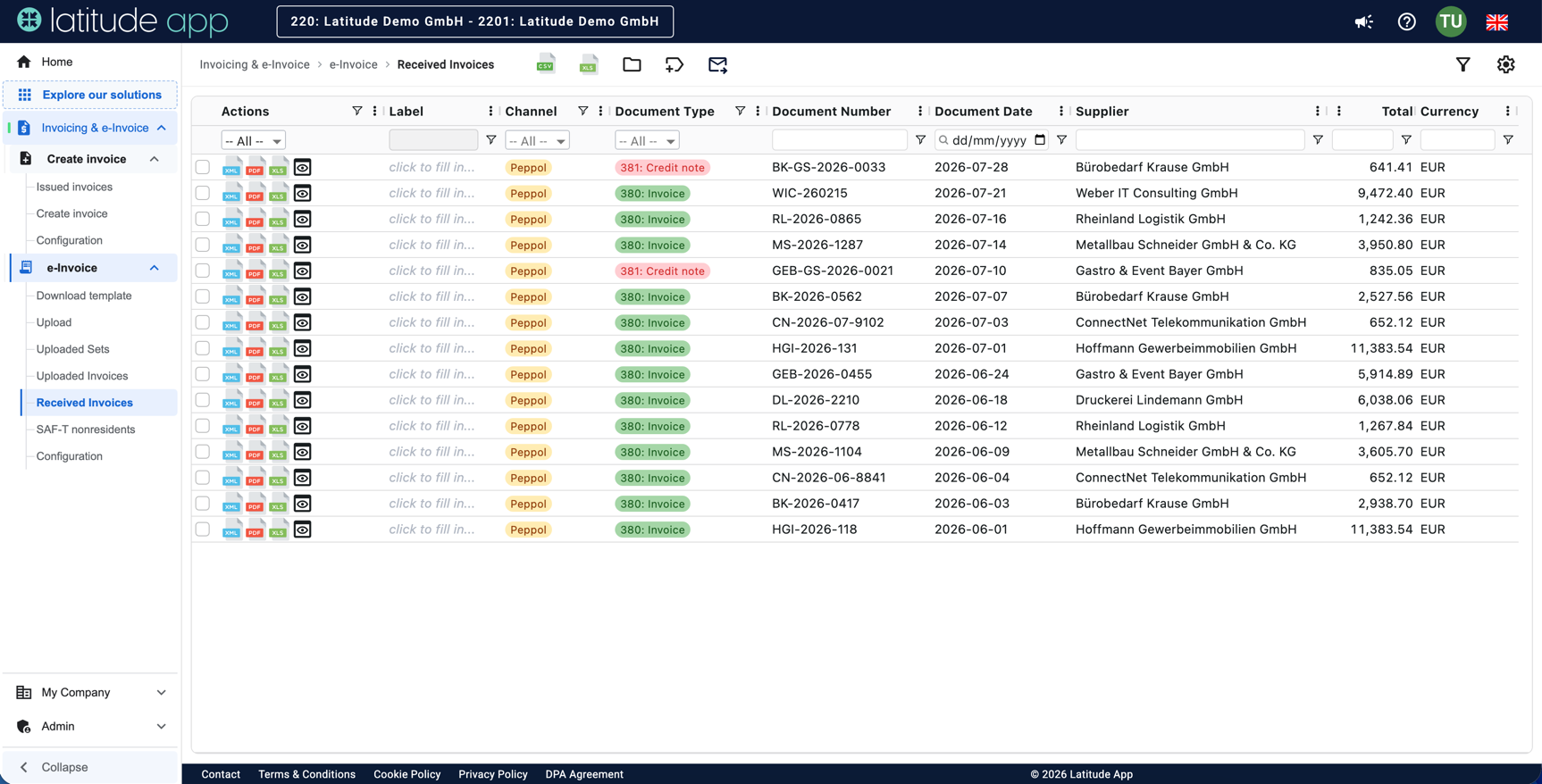
- Your team sees the invoice in Latitude App, rendered, searchable and ready for approval and export
The formats
The formats Germany accepts
XRechnung (UBL)
Germany's national CIUS of EN 16931, maintained by KoSIT and now at generation 3.x. It is the reference format for B2G and widely used in B2B. Latitude App receives, renders and archives it natively.
XRechnung (CII)
The same standard in UN/CEFACT CII syntax, common in the German market because ERP exports and ZUGFeRD's embedded XML use CII. Latitude App converts CII invoices to a single canonical view on arrival and always preserves the original file untouched.
Peppol BIS Billing 3.0
The pan-European profile of EN 16931 and the lingua franca of the Peppol network, fully compliant with the German mandate. It is the format Latitude App sends by default.
Hybrid PDF formats (ZUGFeRD/Factur-X from version 2.0.1, except the MINIMUM and BASIC-WL profiles) also qualify under the German rules, and since 2025 the legally decisive part is the embedded XML rather than the visual PDF. Real-world German invoices come with quirks such as e-mail endpoints, P.O. box addresses, multiple payment means and document-level charges, and our pipeline is tested against exactly such documents.
Statuses
Know what happened to every invoice you send
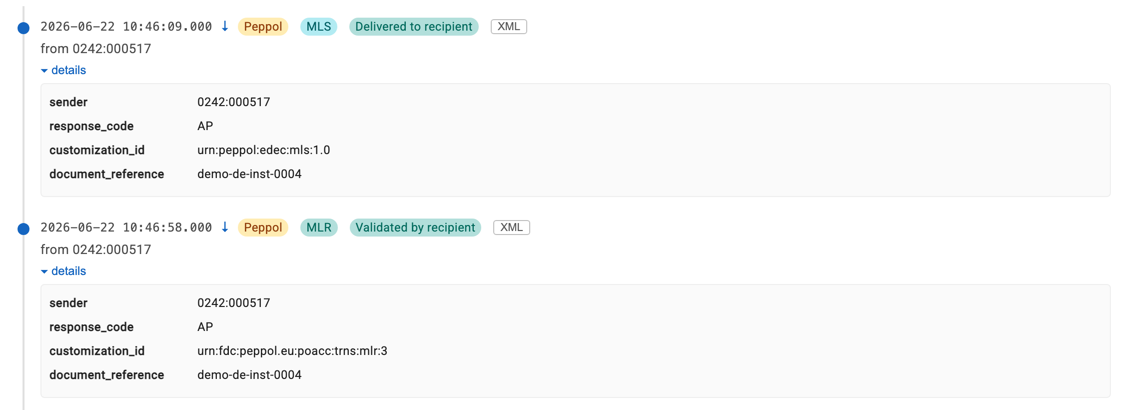
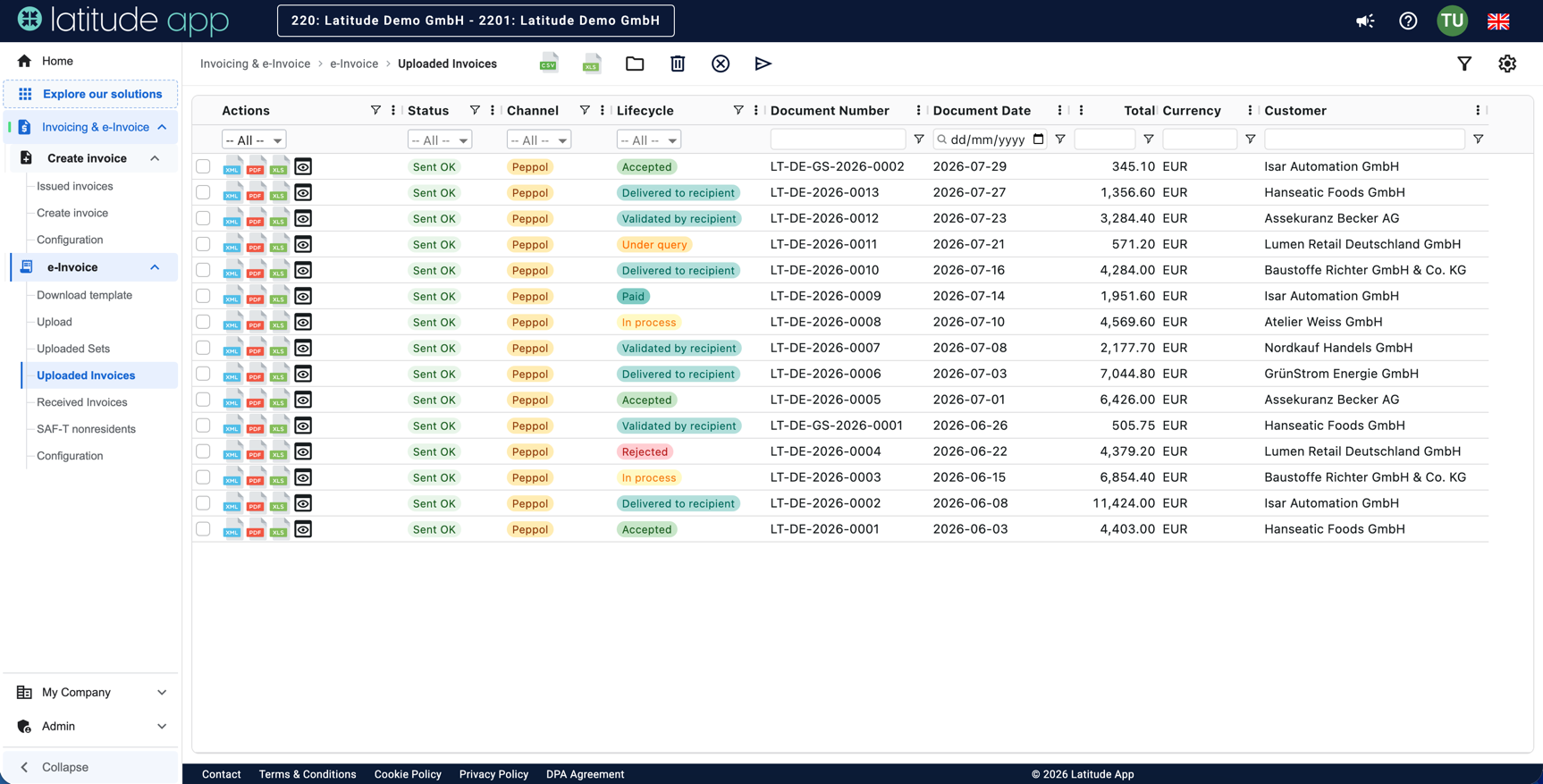
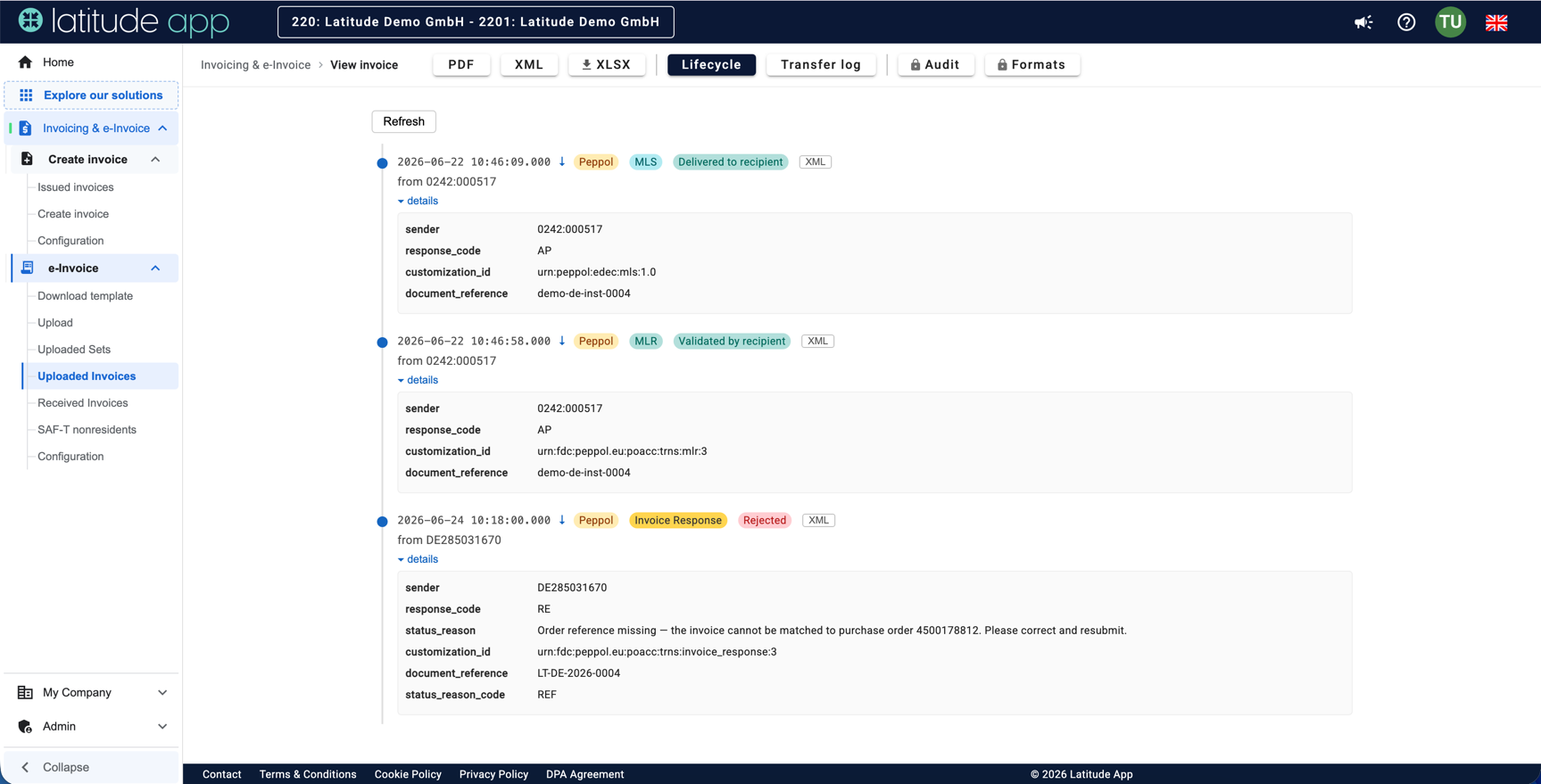
E-mail gives you nothing back. Peppol gives you evidence, and Latitude App turns it into a timeline on each invoice: transport confirmations from the receiving Access Point and business responses from your customer.
Delivered to recipient
The receiving Access Point confirms the invoice arrived: transport-level proof of delivery for your records. The newer variant, gradually replacing MLR.
→ message-level status, collected automatically
Validated by recipient
The recipient's Access Point reports the document passed its checks on arrival. The older variant, still in use: each invoice gets either MLR or MLS, depending on the recipient's Access Point.
→ message-level response from the receiving side
In process
Your customer's system has picked up the invoice and is processing it.
→ business response from your customer
Under query
The customer has a question about the invoice, so expect a clarification before approval.
→ business response from your customer
Conditionally accepted
Accepted, subject to a condition the customer states in the response.
→ business response from your customer
Accepted
The customer approved the invoice for payment.
→ business response from your customer
Rejected
Refused, with the reason attached, for example a missing order reference, so you can correct and resend.
→ business response, with the reason on the invoice
Paid
The customer marked the invoice as paid, closing the lifecycle.
→ business response from your customer
receiving e-invoices has been mandatory for every German business, with no threshold and no consent
the turnover threshold above which issuing becomes mandatory in 2027
from January 2028, every business issues e-invoices
the maximum fine for issuing a non-compliant invoice (§ 26a UStG), on top of the input-VAT deduction risk
years of GoBD retention for the structured original
The solution
How Latitude App helps
Not another PDF mailbox: Latitude App operates its own Peppol Access Point and SMP, speaks XRechnung in both syntaxes and gives your team one platform, from transmission evidence to approval and export.
Direct Peppol access
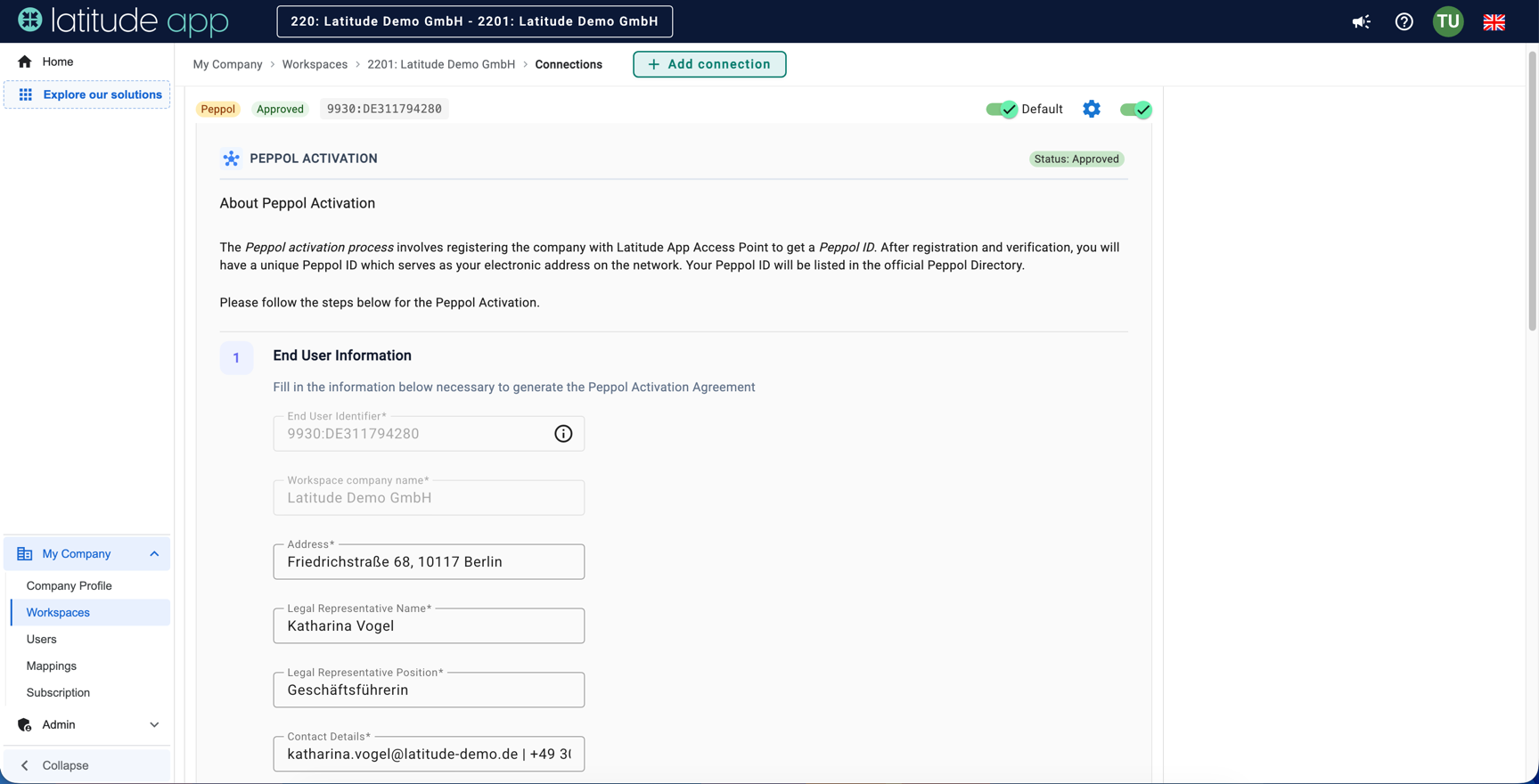
Our own Access Point and SMP, with no third-party relay, and activation is a guided step in the app.
Receive everything in one place
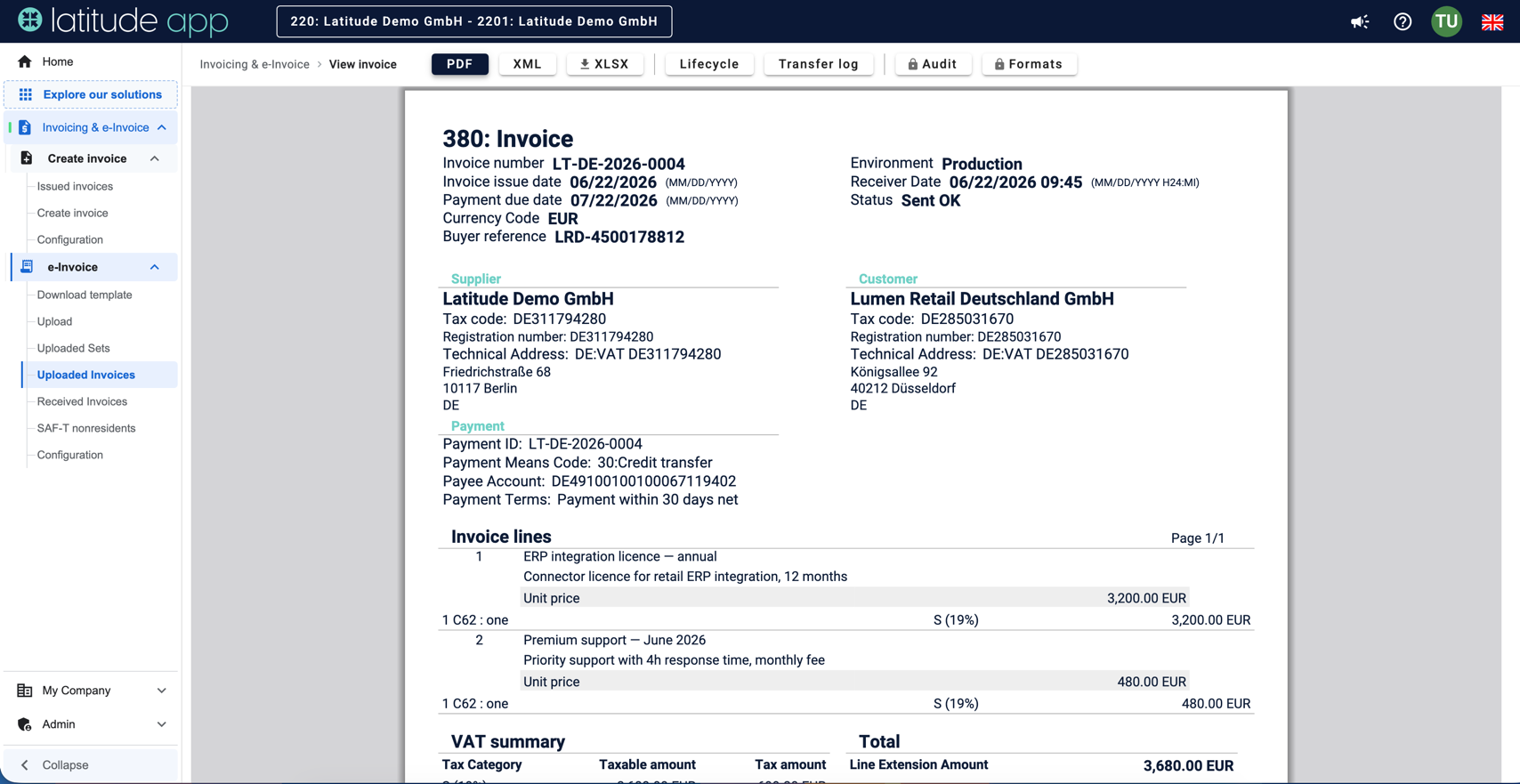
XRechnung UBL, XRechnung CII and Peppol BIS in a single Received view, rendered as PDF or Excel on demand, with the original XML preserved bit-for-bit.
Send compliant invoices
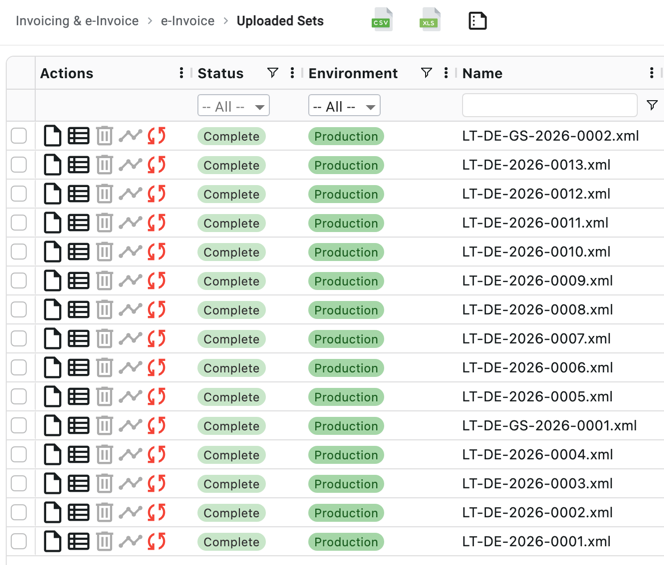
Upload the UBL your ERP produces, create invoices directly in Latitude App, or let us connect your system through a custom integration, and delivery runs over Peppol with transmission evidence.
Full lifecycle log
Delivery confirmations, message-level and business responses (accepted, rejected with reason, paid) collected automatically.
Approval workflow
Routing, auto-labels, custom columns and an audit log of every change.
8-year archive, zero effort
Every original file and transmission artefact is stored and exportable, supporting your GoBD retention duties.
Built for groups
e-Factura (ANAF), Italian SDI, Belgian Peppol, French and Polish channels on one platform: e-invoicing in 24 European countries in total, with VIES validation built in.
9930 : DE + your VAT number
German businesses are addressed on Peppol by their VAT identification number under scheme 9930, for example 9930:DE123456789. When you activate Peppol in Latitude App, we register this participant ID on our Access Point and your company becomes reachable for every Peppol sender in Europe within hours.
Public authorities use a different scheme, the Leitweg-ID (0204); see the B2G question in the FAQ. The number above is an example.
27 Nov 2020 · Suppliers to federal authorities
B2G: XRechnung via ZRE/OZG-RE, addressed by Leitweg-ID
1 Jan 2025 · All businesses
Receive EN 16931 e-invoices; no recipient consent needed
1 Jan 2025 · All businesses
Structured part kept unaltered, machine-readable, 8 years
1 Jan 2027 · Turnover > €800,000 (prev. year)
Issue e-invoices for domestic B2B
1 Jan 2028 · All businesses
Issue e-invoices; EDI only if EN 16931-extractable
~2030+ · All (ViDA)
Intra-EU digital reporting from July 2030; German domestic system announced, not yet scheduled
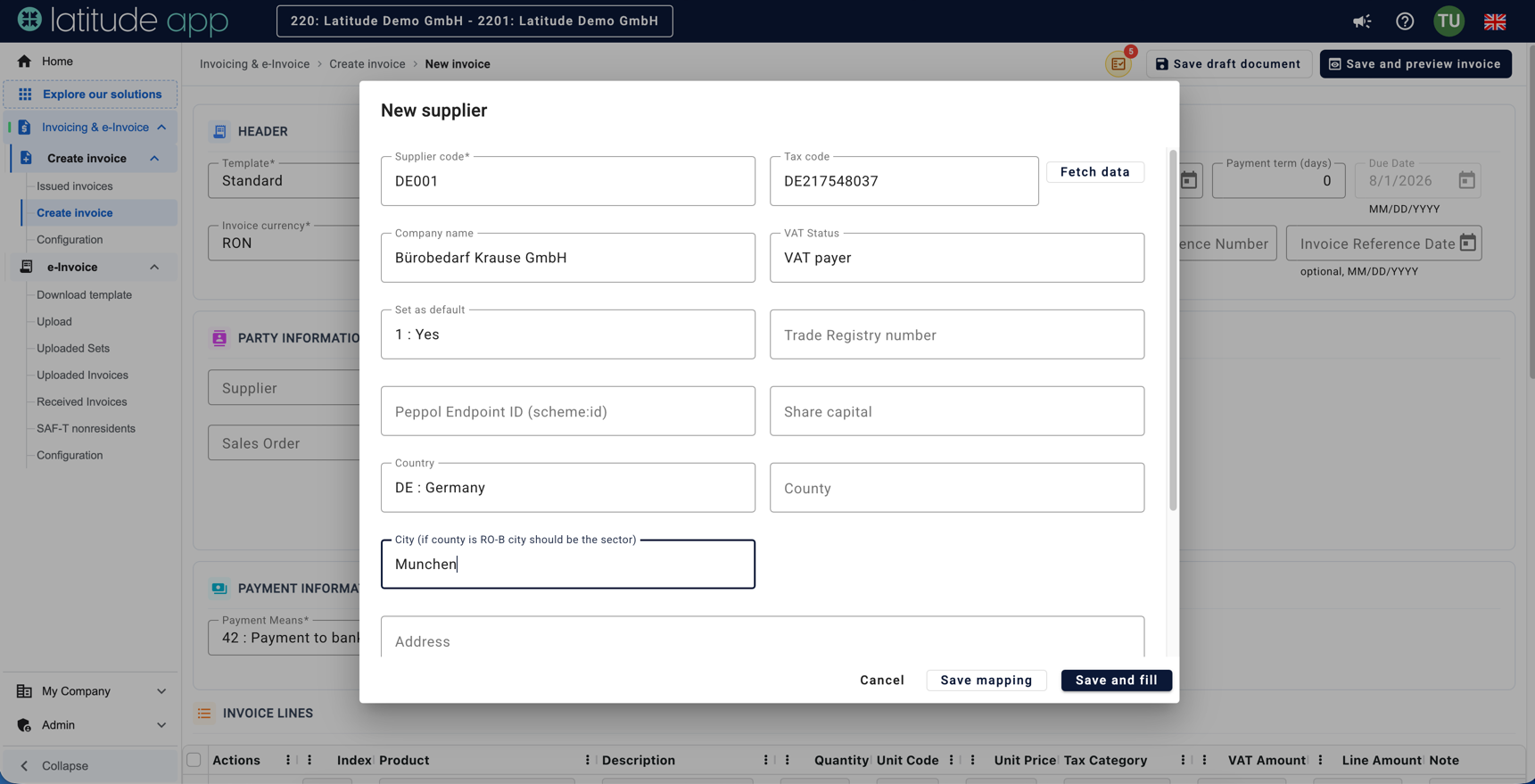
Inside the app
What it looks like in Latitude App
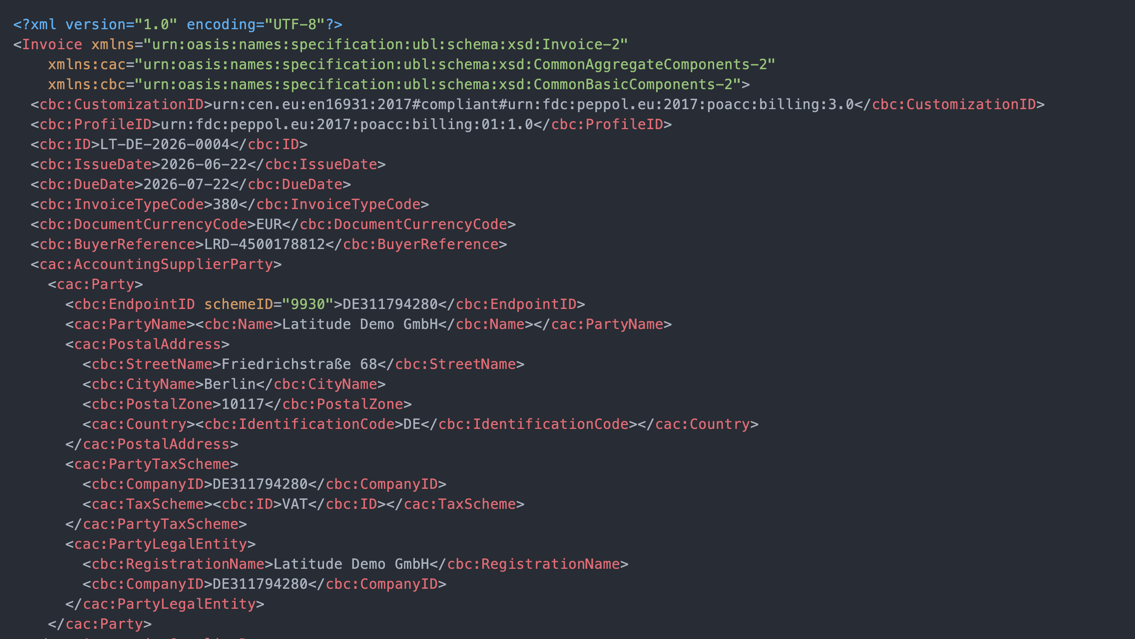
Real screenshots from the platform, from issuing all the way to the final status.
Is a PDF invoice still allowed?
Between German businesses, a PDF is now legally just an "other invoice" (sonstige Rechnung), not an electronic invoice. During the transition it remains allowed only with the recipient's consent: until the end of 2026 for everyone, and until the end of 2027 for issuers under the €800,000 threshold. After that, the structured file is the invoice. A readable PDF can still accompany it, and Latitude App renders one automatically.
Is an e-mail inbox enough to receive e-invoices?
Legally, yes: the tax administration (BMF) has confirmed an e-mail inbox is sufficient. Practically, it gives you no validation, no proof of delivery and no structured workflow, so XML files pile up unchecked in a mailbox. Latitude App receives over Peppol with transport evidence, validates on arrival and renders every invoice for your team.
When do we have to start issuing e-invoices?
From 1 January 2027 if your total turnover in the previous year exceeded €800,000, and from 1 January 2028 regardless of turnover. Small entrepreneurs (§ 19 UStG) are exempt from issuing, but they must still be able to receive. Nothing stops you from switching earlier, since reception has been mandatory since 2025 anyway.
XRechnung, ZUGFeRD or Peppol BIS: which one do we need?
All of them comply with EN 16931, so all are valid under the German mandate. Latitude App receives XRechnung in both syntaxes (UBL and CII) as well as Peppol BIS, and sends Peppol BIS by default. Hybrid ZUGFeRD/Factur-X invoices qualify too (from 2.0.1, except the MINIMUM and BASIC-WL profiles), with the embedded XML as the legally decisive part.
Our software can only export invoices in its own format. What can we do?
Contact us and we set up a custom implementation project: we build an integration that takes the format your system exports and loads it into Latitude App automatically, where it is converted and validated like any other invoice. We support custom development for exactly these cases, where the standard format isn't available.
Is there a central platform like Italy's SDI?
No. Germany has no government platform for B2B, so invoices travel directly between businesses over the channel they choose, whether Peppol, EDI or e-mail. That is why the network and your tooling matter: delivery, validation and status tracking are entirely on your side. A domestic reporting system has been announced but has no date yet; only ViDA's intra-EU digital reporting from July 2030 is fixed.
What are the risks if we ignore the mandate?
Issuing a non-compliant invoice can be fined with up to €5,000 under § 26a UStG. Customers may refuse non-compliant invoices, which delays payment, and an invoice that doesn't meet the requirements can put your customer's input-VAT deduction at risk, a problem that quickly becomes a commercial one between you and them.
What about invoices to public authorities (B2G)?
B2G runs on a separate, older track: since November 2020, suppliers to federal authorities have submitted XRechnung electronically, addressed by Leitweg-ID (Peppol scheme 0204). Since September 2025 the single federal portal is OZG-RE, which absorbed the older ZRE, and many federal states have equivalent rules and portals. Latitude App covers B2G delivery over Peppol where the authority accepts it.
We already have a Peppol provider. Can we migrate without downtime?
Yes. A Peppol participant ID can be moved from one Access Point to another: we coordinate the switch so your registration moves to our SMP without a gap, and your suppliers notice nothing, since they keep sending to the same 9930 identifier. Incoming invoices simply start arriving in Latitude App.
This article is for information purposes only and does not constitute tax or legal advice. German e-invoicing rules may change; the information reflects the situation at the date of the last update.
Beyond Germany
The same platform, across 24 European countries

Romania · e-Factura (ANAF)
Mandatory B2B e-invoicing through ANAF's SPV, covered natively.
Read the guide →
Belgium · Peppol B2B since 2026
Structured invoicing over Peppol, mandatory for domestic B2B since January 2026.
Read the guide →
Italy · SDI & FatturaPA
An accredited SDI transmission channel: issue, receive and track FatturaPA.
Read the guide →Testimonials
What our clients say
Real feedback from companies across Romania and international clients using Latitude App for tax compliance.
Want a process this simple too?
Book a demo
Gabriel Băluță
Senior Accountant
Banking
Société Générale Global Solution Centre SA
Latitude App is very useful, reliable, and user-friendly. We integrated the app with our ERP for incoming and outgoing invoices and automated e-Invoice transfer with SPV, which helped us comply more easily with legal requirements and improve process efficiency.

BrandSafway Shared Services SRL
GL Team Leader
Support Services
Latitude App is incredibly user-friendly, intuitive, and customer-focused. Its intuitive interface helps us provide improved quality services, significantly reduces process times, and makes it an essential tool for our daily operations.
Alstom GCC Romania SRL
Chief Accountant
Shared Services
Latitude App is intuitive, fast, and reliable, handling invoices smoothly while ensuring compliance and saving valuable time through automation. The e-Invoicing app has had a highly positive impact on our organization by reducing manual effort, minimizing errors, accelerating financial workflows, and strengthening audit readiness.

Morar Elena-Mihaela
Construcții
Hunnebeck Romania SRL
Latitude App simplifies the invoicing process and makes day-to-day operations easier to manage. The application is intuitive, quick to learn, and provides exactly the functionality our team needs to efficiently manage electronic invoicing requirements.












Be ready before your suppliers force the issue
Reception has been mandatory since January 2025, so your next supplier invoice may already be an XRechnung. Setup takes days, not months.